Do you like this podcast? Would you like it to keep going?
It can only thrive and continue with listener support. If you listen to the show but don’t yet support it, please do support it now: patreon.com/connerhabib
AEWCH HAS BEEN CASTING FOR OVER EIGHT YEARS & OVER 300 EPISODES. ITS ONLY FINANCIAL SOURCE IS LISTENER SUPPORT VIA PATREON.
Thank you.
LISTEN ABOVE VIA SOUNDCLOUD or
SPOTIFY • APPLE PODCASTS • POCKET CASTS • CASTBOX • PLAYERFM

Friends,
This is the fourth episode* in a series called The Spirit-Era and Its Aftermaths in which I look at the way spiritual, technological, and occult flourishings at the turn of the 19th into 20th century are still with us today, and in fact, being echoed by our own time.
This time, we’re moving closer and closer to our present age, away from the Spirit-Era and into its aftermaths, tracking the ways that paranormal investigations, and paranormal phenomena themselves, changed as they emerged from that era.
And I look into all of the with my guest, journalist BEN MACHELL, author of the compulsively readable and also illuminating book Chasing the Dark: A 140-Year Investigation of Paranormal Activity.
One thing I’ve noticed again and again in researching and recording this series of episodes is that the so-called esoteric, the miraculous, the paranormal are all common.
Whether it’s a haunting, someone who is able to accomplish a feat of endurance, or the ways in which the world is simply very strange if we just look at it without taking it for granted: these are not aberrant occurrences. We have all experienced them, or heard about someone who has, or have shared stories about them, or have found some evidence for them or theorized about them.
So when we tell stories about the paranormal, we are really just telling stories about the normal world.
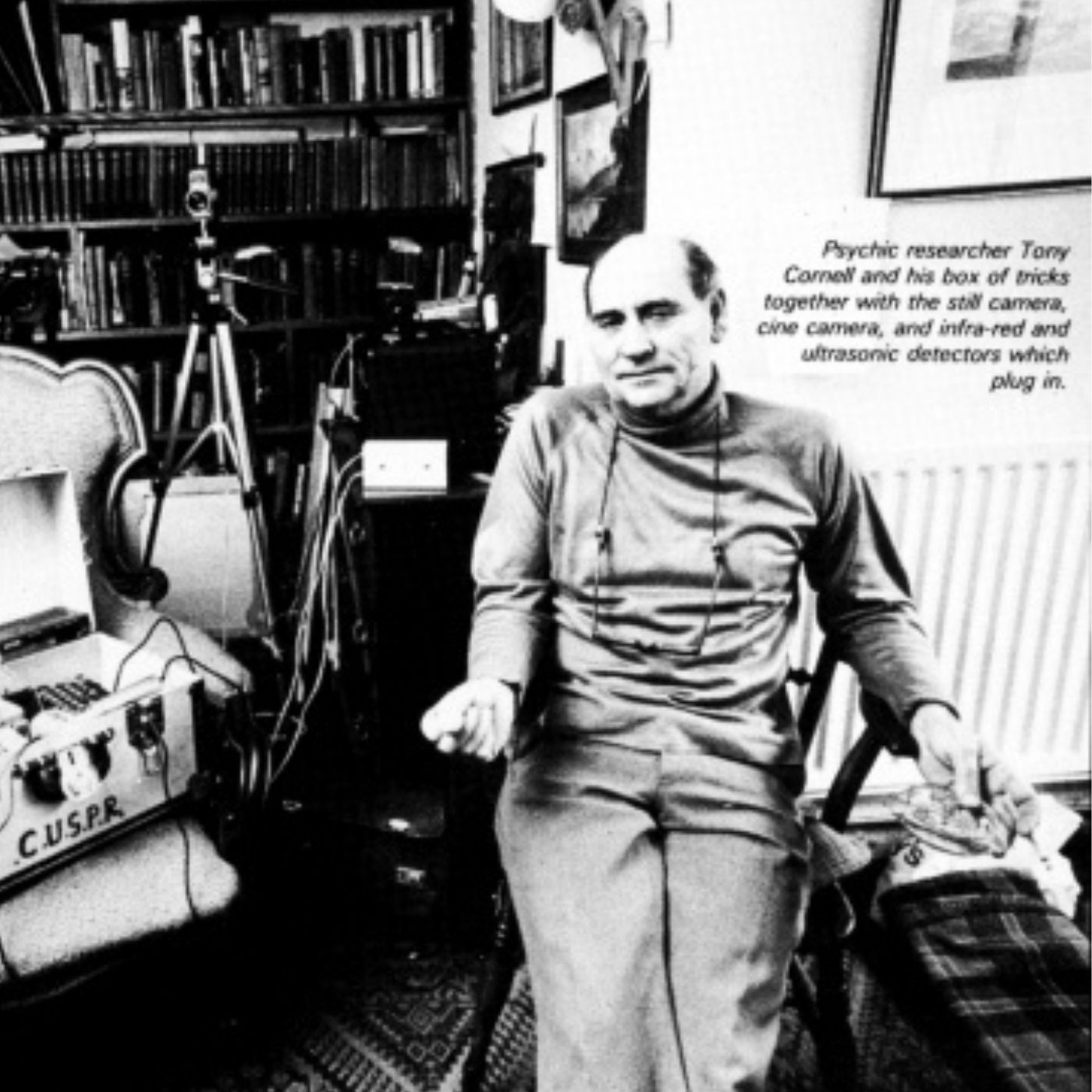
In Ben’s book, he takes a long and thoughtful journey following the life and work of paranormal investigator Tony Cornell, a member of the Society for Psychical Research who appeared on TV, wrote books, and even was featured in a computer magazine for building a device to try to detect paranormal phenomenon. But unlike the performative ghost conjurers of the late 19th century or the fakirs in the early 20th, Tony (1924 – 2010) wasn’t trying to create spectacular performance, and wasn’t motivated purely by egotistical posturing as a debunker either. Rather he sought to understand what was really happening in people’s lives.
Through following Tony, Ben depicts a fascinating alternate history of the everyday: people simply living their lives, but then experiencing something they don’t understand and can’t explain, something that feels out of place to reality itself. Sometimes the unexplainable isn’t the phenomena, but a feeling, a need to cry for help.
So a picture begins to emerge – the paranormal as the presence of motivators – whether in our own behavior or in furniture and dishes flying through the air that we can’t grasp, that we need help with.
What a change from where the Spirit-Era started, with the frightening glamour of the table rapping spirits and the ectoplasmic bonds of spiritualist gatherings. And what a difference, also, from the spiritual thinkers who sought to create coherent theories. Here, the theories fell away in the face of spontaneous phenomena for which there were no experts. But if there were an expert, Tony Cornell would be the best of them; and his approach was to live with the uncertain, the unknown.
I’m so exicted to share this episode with you.
(*The third episode on fakirs and miracle-men is here, second episode on literature as occultism is here, and the first on the importance a ghost hunting is here.)
MORE ON BEN & TONY
Ben’s other book isThe Unusual Suspect: The Rise and Fall of a Modern-Day Outlawabout a bank robber in the 2007 global financial crash.
And here’s Ben’s columns about… well, just about everything, at The Times.
Here’s a great clip from the BBC about Tony’s initiating paranormal experience in India, and a case he investigated.
 Conner Habib
Leave a comment