LISTEN ABOVE or via
SPOTIFY • APPLE PODCASTS • POCKET CASTS • CASTBOX • PLAYERFM
Your contribution to Against Everyone With Conner Habib is vital. Support the show with a monthly or or annual pledge via PATREON.
You can also make a one-time contribution to the show today via Square.
Friends,
The first time I heard about the Golden Dawn, I was in high school.
Raised with no religion, but interested in all of them, I was writing little essays about God and trying out little rituals. I was praying and drawing, engaging with the elements and reading comparative religions books. A few years earlier, the interest in witchcraft that seemed to almost pursue me as a child gave way to gentler, kinder nature magic found in books like Earth Power by Scott Cunningham. These were light spiritual rituals that made me feel closer to the trees, the animals, the air.
But high school was terrible.
I was gay, Syrian, reading all the time, shunning sports. My town was filled with neo-Nazis and football players, kids that liked shit music and gay bashing. I was bullied, by the teachers even more than the students. I wanted more than earth power, I wanted power power.
I wanted to feel like I’d left the realm of circumstance and being batted around by everyone else’s desires. I wanted to do what I willed. Witchcraft didn’t seem right anymore, but what could fill the gap?
I went to the spiritual section of the bookstore (Brentano’s, I think) and found the most startling book there. On the cover, there was a person drawing a pentagram of crackling blue light with a magic wand. In the pages, there were instructions on how to make magical tools, and they were elaborate and challenging.
This wasn’t just about holding stones or burying pennies at the foot of a tree. This was Modern Magick by Donald Michael Craig, and the word magick was written with a K.
In contrast to the hell of school, the book represented instead, a sort of academy of magic.
To be honest, I’d be hard pressed to say where it’s mentioned (anyone want to help me out on this?), but I found there allusions to something called The Golden Dawn. I gathered that there was some group of people who had developed together what the book referred to as “high magick.”
Probably like most people – definitely most teenagers – I read the book, but didn’t do too much that was in there.
I moved on, instead, to the Israel Regardie-popularized middle pillar ritual. It felt right a way to understand who I was as a spiritual being rather than trying to cast more power into being.
But I also learned that Regardie had tensions with the Golden Dawn; it was felt that perhaps he shouldn’t have released their secrets. Like Craig, he was democratizing magick. I didn’t like that sort of gatekeeping, that hierarchy and authority, and I didn’t like Crowley. So I turned away from the Golden Dawn for most my life.
Except for some love for the Nobel Prize winning Irish poet, W.B. Yeats, I avoided its members, as well. As an opposing picture to many people learning about ritual and practice at the time, I knew a lot about magic, but relatively little about who the Golden Dawn. With the advent of the internet, it didn’t help that there seemed to be an intense nerd culture around Crowley and the Golden Dawn – a sort of hyperawareness around every detail with people constantly correcting each other in an echo of the clash with Regardie and Golden Dawn members: should the information be interpretable, open to all, intersecting with subjective experience, or should it be rigid, guarded, hidden?
And as I deepened my interests in occultism into adulthood, my pursuit of esoteric christianity, particularly the work of Rudolf Steiner, led me away from them, even if Steiner himself was a sort of side player, an influence on the Golden Dawn. Steiner in a sense united aspects of currents from the Golden Dawn and the other great spiritual movement in the west at the time, Theosophy. Anthropsophy became a layered and progressive spiritual path with real impact and influence on the world. Steiner was connected to both groups, and it’s possible to see the Golden Dawn and Theosophy as magical preparations for the birth of the anthroposophical movement.
For his part, Steiner gave back to the Golden Dawn and its offshoot groups, inspiring many of their members, rituals, and symbols, and was even seen as a high spiritual being by some members.
None of this means, by the way, that I don’t think the Golden Dawn and theosophy aren’t still growing and transforming in their own right, and I hope to come back to both on this show at some point next year.
I’ve become more sympathetic over time to the Golden Dawn. That doesn’t mean I’m going to wade into their rituals, but that a real re-assessment has occurred.
In part, my reassesment of the Golden Dawn comes from a the episodes’s guest.
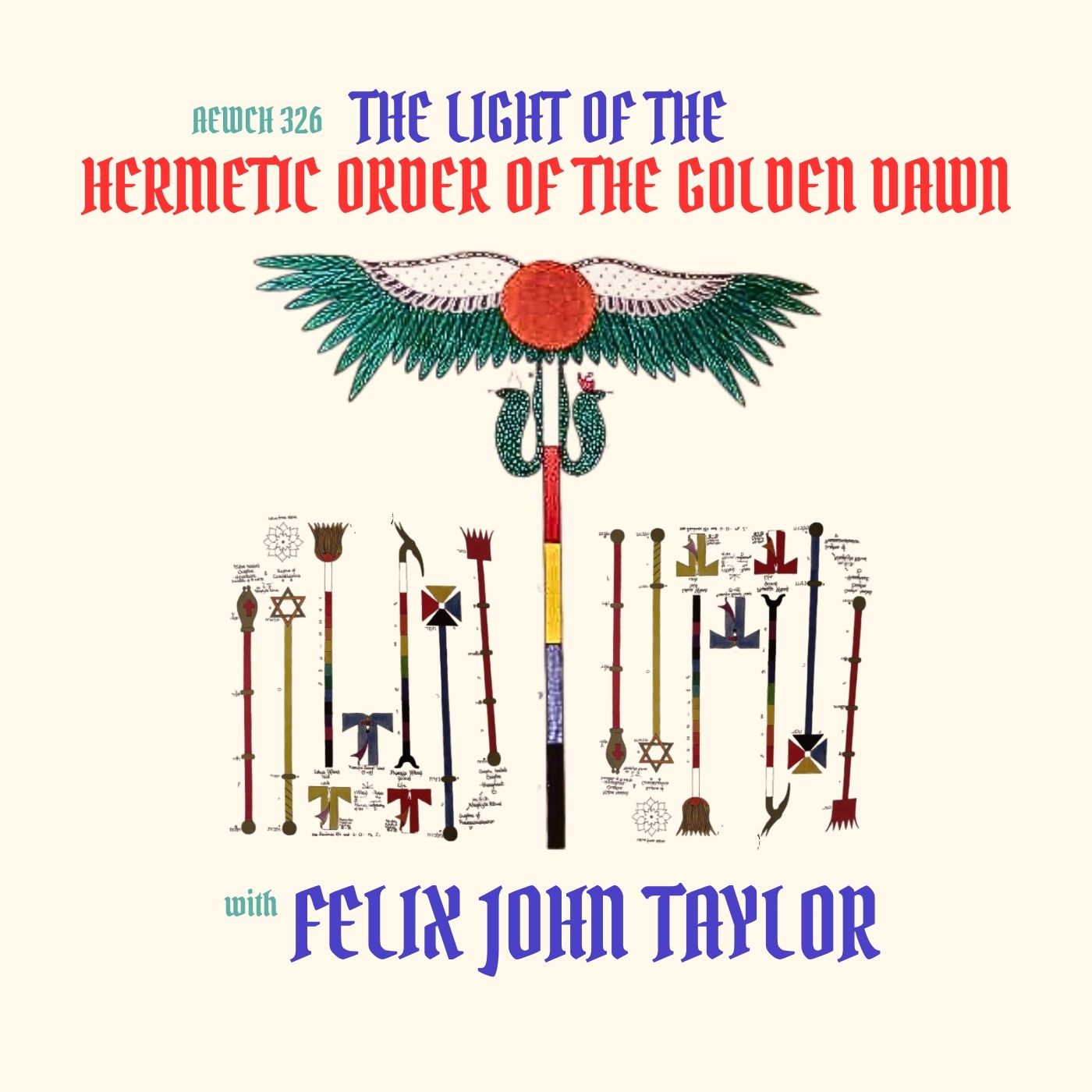
I read librarian and scholar FELIX JOHN TAYLOR ’s beautiful book, The Hermetic Order of the Golden Dawn: Magic Arts and the Occult Revival with great interest. In it, he gives a portrait of the Golden Dawn through its key members and its art.
Members including Yeats and Crowley but also Arthur Machen, Arthur Waite and Pamela Coleman Smith who designed the ubiquitous Rider Waite Smith tarot deck, Moina Mathers who was philosopher Henri Berson’s sister, Costance Wilder – Oscar Wilde’s wife, and actress and fmeinist Florence Farr.
Looking at them together, and especially through Felix’s book, a picture emerges of a magickal movement, of course, but also an art movement and a social movement.
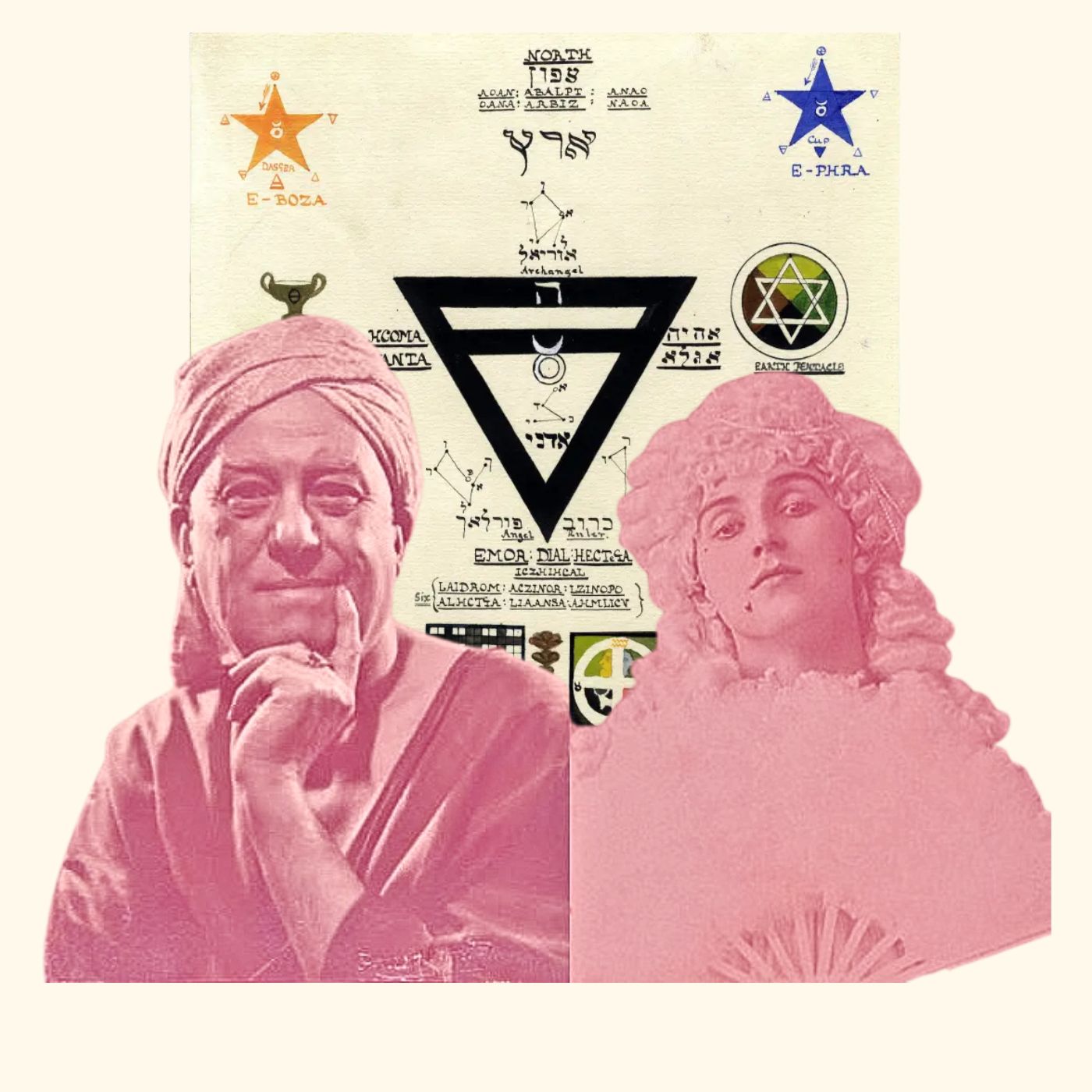
I used to think Crowley’s famous quip – “Ordinary morality is only for ordinary people.” Was repuslive. It’s not like Crowley lived a life of love and compassion. But what about when it’s re-contextualized in light of the history of the Golden Dawn, and Crowley’s relationship – profound love affair, really – with his partner Herbert Pollitt (right) AKA drag queen Diane de Rougy, who Crowley met at a gay bar (or whatever they were called in 1897) called Footlights?
The more I learned about the Hermetic Order of the Golden Dawn, the more I have come to see them, and Crowley included, as people trying to remake what morality could be.
And that meant, against all odds (even the odds people like Crowley himself created), inventing a morality that was differently inclusive.
After all, the members were influenced by Oscar Wilde and Edward Carpenter. Perhaps ordinary people needed something else, an extraordinary morality to elevate them.
And of course their spiritual presence and influence is significant. So I’m so happy you’ll be joining me and Felix John Taylor in thjis reappraisal.
I’m so excited to share this episode with you.
CH


Leave a Reply